 FirstNarration
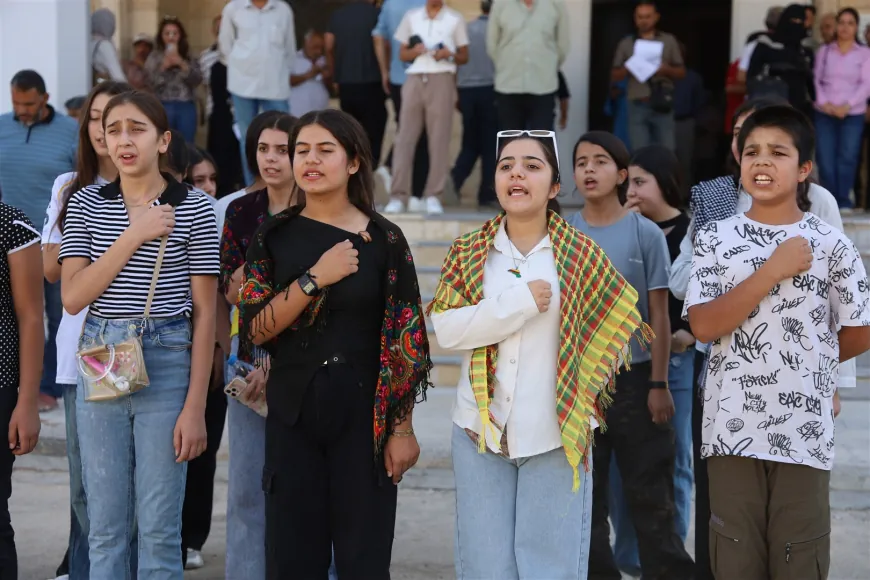
Students and families in Kurdish-majority regions are demanding the right to receive education in the Kurdish language, marking the latest expression of long-standing tensions over linguistic and cultural rights in areas where Kurdish communities form significant populations.
The demand centres on access to schooling conducted in Kurdish rather than the official state languages currently used in education systems across the region. Families argue that instruction in their mother tongue is essential for preserving cultural identity and ensuring children can learn effectively in the language they speak at home.
What the Demands Include
The reported demands focus on establishing or expanding Kurdish-language instruction in primary and secondary schools. This would require either the creation of separate Kurdish-medium schools or the introduction of Kurdish-language tracks within existing institutions.
Such demands typically encompass not only language of instruction but also curriculum content that reflects Kurdish history, literature, and cultural traditions. Families have expressed concern that current education systems marginalise Kurdish identity and leave students disconnected from their heritage.
The timing and specific location of the latest demonstrations have not been fully detailed, though Kurdish communities across several countries, particularly in Syria, Turkey, Iraq, and Iran, have historically raised similar demands.
Historical Context of Kurdish Language Rights
Kurdish communities have faced restrictions on mother tongue education in multiple countries where they reside. In Turkey, Kurdish-language education has been severely limited despite the language being spoken by millions. In Syria, Kurdish was not recognised as an official language for decades, and instruction was conducted exclusively in Arabic.
Following the Syrian civil war, Kurdish-administered areas in northeastern Syria established their own education systems with Kurdish as a primary language of instruction. However, these systems operate parallel to, and sometimes in tension with, state-run schools, creating confusion and limiting recognition of qualifications.
In Iraq's Kurdistan Region, Kurdish has official status and is used in schools, but disputes continue over education policy in disputed territories and areas with mixed populations.
Why Linguistic Rights Matter
Educational research consistently shows that children learn more effectively when taught in their mother tongue, particularly in early years. UNESCO and other international bodies have long advocated for mother tongue-based education as a fundamental right and an effective pedagogical approach.
For minority communities, language of instruction also carries symbolic weight. It signals recognition and respect for cultural identity, and its absence can be perceived as marginalisation or assimilation pressure.
The Kurdish case is part of a broader global pattern where linguistic minorities, from Catalans in Spain to Uyghurs in China, face similar struggles over education rights. The outcomes of these disputes often reflect wider political dynamics around autonomy, identity, and state control.
Challenges and Uncertainties
Implementing mother tongue education faces practical obstacles even where political will exists. Developing standardised curricula, training teachers, and producing textbooks in Kurdish requires resources and coordination. Kurdish itself has multiple dialects, which complicates standardisation efforts.
Political opposition remains a significant barrier in countries where governments view Kurdish-language education as a threat to national unity or a step toward separatism. Security concerns and ongoing conflicts in some Kurdish regions further complicate education policy.
Whether the current demands will lead to concrete policy changes remains uncertain. Past efforts have met with varying degrees of success depending on local political conditions, international pressure, and the strength of civil society mobilisation.
The situation continues to develop as families and students press their case for linguistic rights in education.


