 FirstNarration
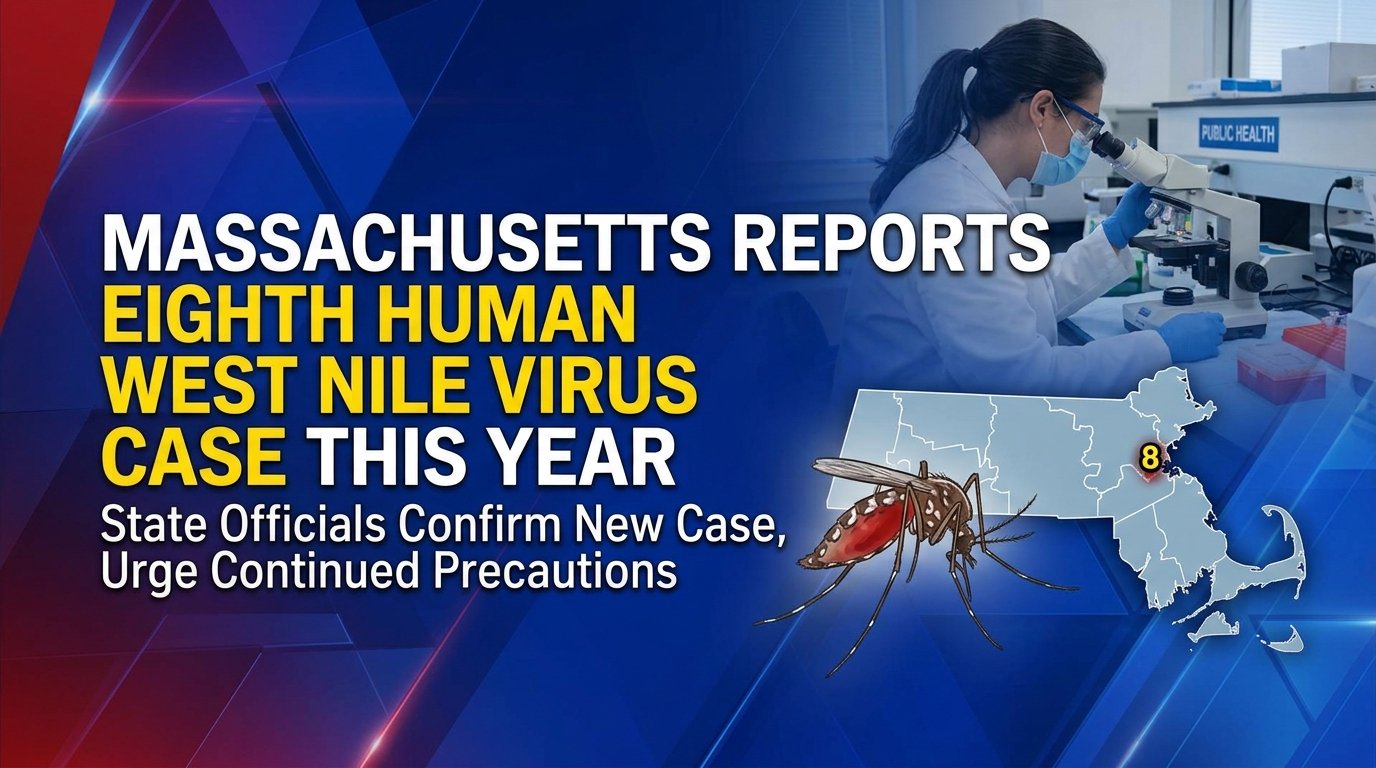
The Massachusetts Department of Public Health confirmed on Friday that an eighth person has tested positive for West Nile virus in the state this year. The announcement continues a seasonal pattern of mosquito-borne illness transmission that typically peaks in late summer and early autumn.
Health authorities did not release identifying details about the individual or specify which part of Massachusetts the case was detected in, consistent with standard privacy protocols for infectious disease reporting.
What West Nile Virus Is and How It Spreads
West Nile virus is transmitted to humans primarily through the bite of an infected mosquito. Mosquitoes become carriers after feeding on infected birds, which serve as the virus's natural reservoir. The virus cannot spread directly from person to person through casual contact.
Most people infected with West Nile virus, approximately 80 percent, develop no symptoms at all. Among those who do become ill, the majority experience mild flu-like symptoms including fever, headache, body aches, and sometimes a skin rash. These symptoms typically resolve on their own within a few days to weeks.
However, roughly one in 150 infected individuals develops severe neurological illness such as encephalitis or meningitis, inflammation of the brain or surrounding tissues. Severe cases can cause high fever, neck stiffness, confusion, tremors, seizures, paralysis, and in some instances, permanent neurological damage or death. People over 60 and those with weakened immune systems face higher risk of serious complications.
Seasonal Pattern and Prevention
West Nile virus activity follows a predictable seasonal cycle tied to mosquito populations. Cases typically begin appearing in summer, peak in August and September when mosquito activity is highest, and decline as temperatures drop in autumn. The eighth confirmed case in Massachusetts falls within this expected timeframe.
Public health guidance for reducing exposure remains consistent: use insect repellent containing DEET, picaridin, or oil of lemon eucalyptus when outdoors, particularly during dawn and dusk when mosquitoes are most active. Wearing long sleeves and trousers provides additional protection. Eliminating standing water around homes, where mosquitoes breed, reduces local mosquito populations.
Window and door screens should be intact to prevent mosquitoes from entering living spaces.
No Specific Treatment or Vaccine
There is currently no specific antiviral treatment for West Nile virus infection in humans, nor is there a vaccine available for human use. Medical care for severe cases focuses on supportive treatment, including intravenous fluids, pain management, and nursing care, often requiring hospitalization.
Anyone experiencing symptoms of severe West Nile virus infection, particularly high fever combined with severe headache, stiff neck, confusion, or muscle weakness, should seek immediate medical attention. Early recognition of neurological symptoms can be critical for appropriate medical management.
The confirmation of additional cases serves as a reminder that mosquito-borne illness risk persists as long as mosquito populations remain active, which in temperate climates like Massachusetts can extend into October depending on weather conditions.


