FirstNarration
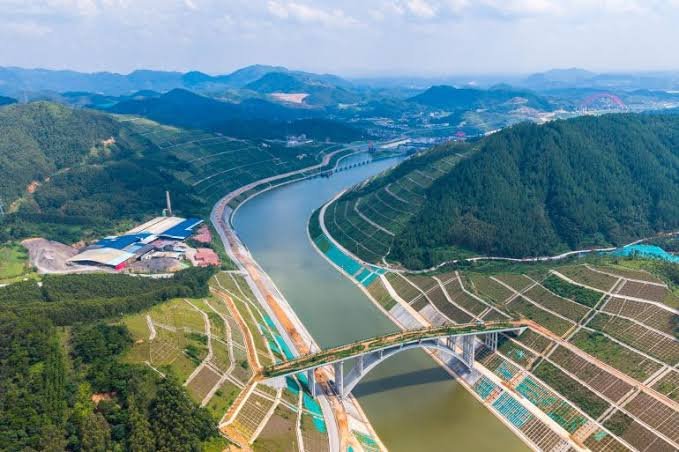
The Pinglu Canal, a major waterway infrastructure project in southern China, is being positioned as a significant new economic corridor connecting China's inland regions directly with Southeast Asian markets. Experts describe the canal as a win-win development that could reshape trade flows between China and the Association of Southeast Asian Nations (ASEAN).
The canal is designed to provide inland Chinese provinces with improved maritime access to ASEAN countries, reducing transport costs and transit times for goods moving between China's interior and Southeast Asian ports. The project is part of China's broader infrastructure development strategy under the Belt and Road Initiative.
What the Canal Connects
The Pinglu Canal links China's Guangxi region with the sea, creating a new route that bypasses existing transport bottlenecks. Guangxi borders Vietnam and serves as a natural gateway to ASEAN markets, but historically faced limitations in direct maritime connectivity.
By establishing this waterway, the canal opens a more efficient path for goods produced in central and western China to reach Southeast Asian destinations. The route is expected to handle both containerized cargo and bulk commodities, with particular relevance for agricultural products, manufactured goods, and raw materials.
ASEAN represents one of China's largest trading partners, with bilateral trade reaching substantial volumes annually. Improved logistics infrastructure between the two regions directly affects the cost structure of cross-border commerce.
Economic Implications
Experts characterize the canal as mutually beneficial because it not only serves Chinese exporters but also provides ASEAN countries with better access to China's inland consumer markets. The improved connectivity works in both directions, potentially increasing trade volumes and economic integration between the regions.
For Chinese provinces distant from major ports, the canal reduces dependence on longer overland routes or circuitous shipping paths. This infrastructure advantage could make these regions more competitive in export markets and more attractive for manufacturing investment.
For ASEAN economies, the canal represents another trade artery that can handle growing volumes of goods destined for China's interior, where rising incomes are driving demand for imported products. Southeast Asian agricultural exporters, in particular, stand to benefit from faster, cheaper access to Chinese consumers.
Regional Context
The Pinglu Canal is one of several major infrastructure projects China has undertaken to strengthen economic ties with Southeast Asia. These projects include railways, highways, and port developments across the region, all aimed at reducing trade friction and deepening economic linkages.
China and ASEAN have maintained strong economic relationships for years, with ASEAN becoming China's largest trading partner in recent periods. Infrastructure improvements like the Pinglu Canal reinforce this relationship by addressing practical logistical challenges that have historically limited trade growth.
The canal also fits within China's strategy of developing its western and southwestern regions, which have lagged behind coastal provinces economically. By improving these areas' access to international markets, the project supports broader domestic development goals alongside international trade objectives.
Broader Trade Networks
While the canal primarily serves China-ASEAN trade, its completion could have ripple effects on wider regional trade patterns. Improved connectivity between inland China and Southeast Asian ports may influence supply chain decisions for companies operating across Asia, potentially shifting manufacturing and distribution patterns.
The project also demonstrates the continuing importance of waterway infrastructure in global trade, despite advances in air and land transport. For bulk goods and containerized freight, water transport remains the most cost-effective option over long distances, making canal and port projects strategically significant.
As regional trade volumes continue growing, infrastructure capacity becomes a limiting factor. Projects like the Pinglu Canal address this constraint, creating room for further economic expansion between China and its Southeast Asian neighbors.