FirstNarration
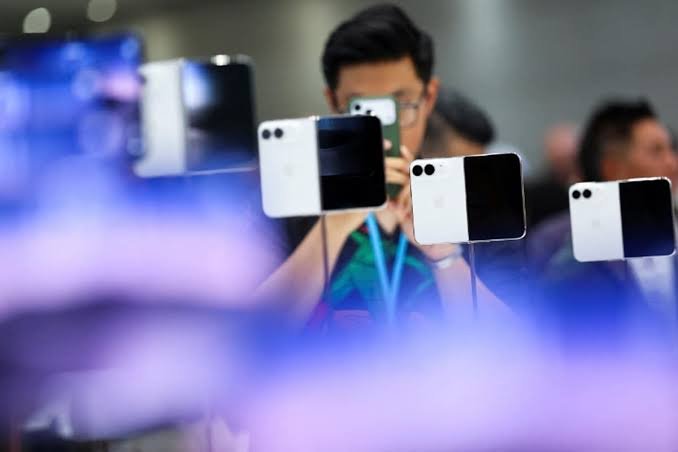
Samsung is stepping up its campaign around foldable smartphones after Apple officially entered the category with the iPhone Duo, a $1,999 folding device that could significantly reshape competition at the premium end of the smartphone market.
Apple unveiled the iPhone Duo on Wednesday, marking its first major move into a segment that Samsung and several Chinese manufacturers have spent years developing. Samsung, which helped bring foldable smartphones into the mainstream, is responding by emphasizing its experience, hardware development and established position in the category.
The timing sets up one of the most significant smartphone rivalries in years, with Apple now directly challenging Samsung in a product segment where the South Korean technology company has enjoyed an important head start.
iPhone Duo Takes Direct Aim at Galaxy Z Fold 8
Apple has adopted a passport-style folding design for the iPhone Duo. Its $1,999 price also places the device remarkably close to Samsung’s latest Galaxy Z Fold 8, which is priced at $1,899.
The Galaxy Z Fold 8 was introduced less than two months before Apple’s announcement and features a thin and lightweight design alongside integration with Google’s Gemini artificial intelligence technology.
Apple’s decision to price its first foldable only around $100 above Samsung’s competing flagship could make the battle particularly intense. Rather than positioning the Duo as an entirely separate ultra-luxury product, Apple appears prepared to compete directly for consumers already considering premium foldable smartphones.
Market research firm Counterpoint expects Apple’s arrival to have a substantial impact on the sector. Its projections indicate Apple could secure around 25% of the foldable smartphone market, while Samsung is expected to hold approximately 38%.
Samsung Responds With ‘Welcome to Foldables’ Campaign
Samsung has wasted little time responding to its longtime rival.
The company has launched billboard campaigns in major international cities, including Seoul, Tokyo and London, promoting messages such as “Welcome to Foldables” while highlighting the lightweight design and hardware capabilities of its own foldable devices.
Samsung has also taken the competition to social media, publishing sarcastic posts aimed at Apple following the iPhone Duo announcement. The campaign seeks to remind consumers that Samsung has spent years refining foldable technology while Apple is only now entering the category.
Apple, however, is presenting its later arrival differently. New CEO John Ternus criticized existing foldable devices during the launch, arguing that earlier products could feel like two separate smartphones joined together.
The competing messages highlight the strategies likely to define the next phase of the rivalry: Samsung will emphasize experience and maturity, while Apple will attempt to convince consumers that its later entry has allowed it to rethink the foldable experience.
Samsung Has Years of Foldable Experience
Samsung still holds a major advantage in experience.
The company introduced its first mass-market foldable smartphone in 2019. The initial launch faced difficulties, including reports of damaged displays that resulted in a delayed rollout, but Samsung continued investing heavily in the technology.
Since then, Samsung has released eight generations of foldable smartphones and refined areas such as durability, weight, display technology and overall design.
Competition has also expanded beyond Samsung and Apple. Chinese manufacturers, particularly Huawei, have become increasingly important players in foldable smartphones, creating a market that is far more competitive than when Samsung launched its earliest models.
Apple’s entry could now push the category further into the mainstream.
Apple Enters a More Mature Foldable Market
Apple may be arriving years after Samsung, but its timing could prove important.
Instead of entering during the earliest and most experimental stage of foldable smartphones, Apple is launching its first device after manufacturers and suppliers have spent years improving flexible displays and related components.
Apple is also benefiting from an established foldable supply chain. Samsung Display, a unit of Samsung, is among the companies supplying the specialized display technology required for folding devices.
The situation creates an unusual competitive dynamic: Samsung is fighting Apple for smartphone customers while part of the broader Samsung organization also participates in the supply chain supporting foldable devices.
Analysts have long observed that Apple frequently waits for emerging technologies to mature before entering a category. The iPhone Duo appears to follow that strategy, arriving when foldable devices are thinner, lighter and more refined than the first generation of products introduced several years ago.
Foldable Smartphone Competition Is Entering a New Phase
Apple’s arrival could ultimately benefit the entire foldable smartphone market by bringing greater consumer attention to a category that has remained relatively niche compared with conventional smartphones.
Samsung enters the new competitive phase with years of product development, global distribution and an established foldable lineup. Apple brings one of the world’s largest premium smartphone customer bases and an ecosystem capable of rapidly increasing awareness of a new device category.
The immediate question is whether existing iPhone customers will embrace the new folding design and whether Samsung can maintain its leadership as its biggest global smartphone rival enters one of its most distinctive product categories.
With the $1,999 iPhone Duo now competing against the $1,899 Galaxy Z Fold 8, the battle for the premium foldable market has become considerably more intense.