FirstNarration

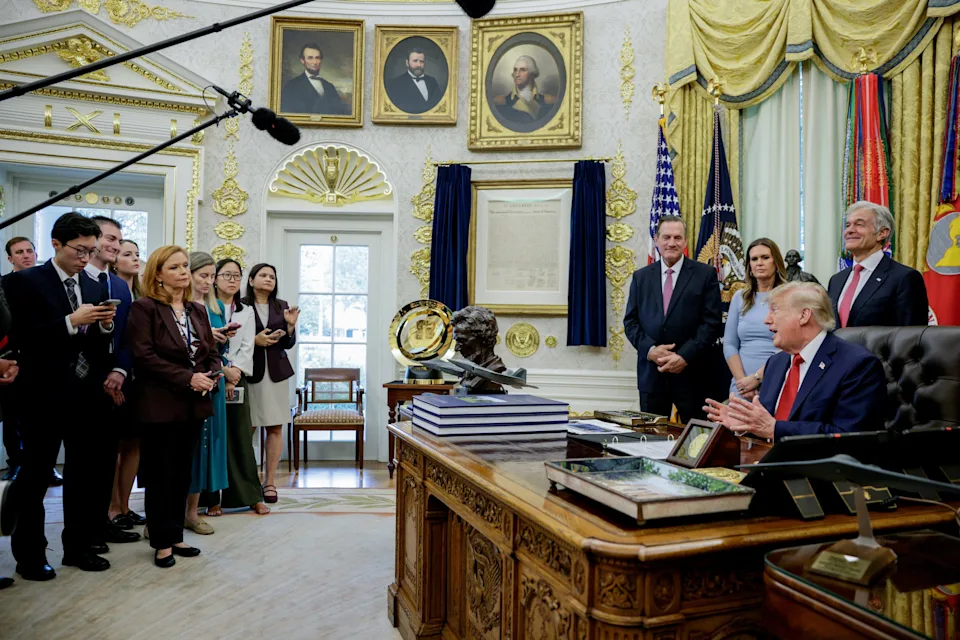
Former United States President Donald Trump has made a striking assertion that the ongoing conflict involving Iran could come to an immediate conclusion following the upcoming American midterm elections. The statement, delivered during a recent public appearance, has sparked considerable attention across international diplomatic circles and raised questions about potential shifts in Middle Eastern geopolitics.
Trump's remarks suggest confidence in a rapid resolution to hostilities that have characterized relations between Iran and various regional actors, though he provided limited details on the mechanisms through which such a swift conclusion might be achieved. The timing of his comments, linking the conflict's potential end to the domestic American electoral calendar, has prompted analysis of what diplomatic or strategic changes might follow the midterm voting.
What Trump Said and the Context
During his public remarks, Trump emphasized that the conflict situation involving Iran would be resolved "immediately" once the midterm elections conclude. While he did not elaborate on specific diplomatic initiatives or negotiations that might facilitate this outcome, his statement reflects a broader pattern of assertive rhetoric regarding Middle Eastern conflicts.
The former president has historically positioned himself as a dealmaker capable of resolving complex international disputes, and his latest comments appear consistent with that self-presentation. However, the lack of concrete details has left observers questioning whether his statement reflects genuine diplomatic groundwork or represents political positioning ahead of the electoral cycle.
The conflict Trump referenced involves ongoing tensions that have escalated in recent months, with Iran facing pressure from multiple directions including economic sanctions, regional rivalries, and internal challenges. The situation has implications far beyond Iran's borders, affecting energy markets, regional stability, and the strategic calculations of powers both near and distant.
Regional Implications and Strategic Considerations
Any potential resolution to the Iran conflict would carry significant consequences for the broader Middle East and South Asian region. Iran maintains complex relationships with neighboring countries, and changes in its international standing could reshape regional power dynamics that have been relatively stable for years.
The Islamic Republic has been involved in various proxy conflicts and maintains influence across several countries through allied groups and strategic partnerships. A sudden shift in Iran's conflict posture could affect these relationships and potentially create both opportunities and challenges for regional stability.
Energy markets would likely respond to any genuine de-escalation, as Iran's oil production capacity and its strategic position along crucial shipping lanes make it a significant factor in global energy security. Countries dependent on stable energy supplies watch developments involving Iran with particular attention.
Why This Matters for Pakistan
Pakistan maintains a delicate balancing act in its relationship with Iran, sharing a lengthy border and historical ties while also navigating complex relationships with Iran's regional rivals and with the United States. Any major shift in Iran's international position would directly affect Pakistani strategic calculations.
The two countries cooperate on border security issues and have discussed economic projects, though progress has often been slow due to international sanctions and competing priorities. A resolution to Iran's conflicts could potentially open new avenues for bilateral cooperation, particularly in energy and trade sectors where Pakistan has long-standing interests.
Pakistan's relationship with the United States adds another layer of complexity. Islamabad has historically sought to avoid being drawn into regional conflicts while maintaining productive ties with multiple powers. A US-brokered or US-influenced resolution to the Iran situation would require careful Pakistani diplomacy to preserve its relationships across the region.
Security considerations also factor prominently in Pakistani thinking. The shared border region has occasionally seen tensions, and stability in Iran contributes to Pakistan's own border security objectives. Additionally, any regional realignment could affect the broader security environment in which Pakistan operates.
Questions Remain About Implementation
Despite Trump's confident assertion, significant questions remain about how any rapid resolution might be achieved. The conflict involving Iran encompasses multiple dimensions including nuclear program concerns, regional influence operations, sanctions regimes, and bilateral disputes with various countries.
Resolving these interconnected issues would typically require extensive negotiations, compromises from multiple parties, and mechanisms for verification and implementation. The suggestion that such complex matters could be concluded immediately after a domestic American election has prompted skepticism among diplomatic analysts.
Furthermore, any agreement would need to address the interests of multiple regional and international stakeholders, not all of whom align with American priorities or would necessarily accept terms negotiated primarily by Washington.
As the midterm elections approach, observers across the region and beyond will be watching to see whether Trump's statement reflects substantive diplomatic developments or represents political rhetoric. For countries like Pakistan with direct interests in regional stability, the coming months may prove consequential regardless of the outcome.